
By Ian Bremner
From sleepy port town to the epicenter of grunge, to one of the tech capitals of the world, to the home of budding folk bands and songwriters, Seattle is a city seemingly always in the midst of an ebb and flow. For a city perhaps most known for Jimi Hendrix, Pearl Jam and Nirvana, it’s also been a fostering creative incubator for bands like Fleet Foxes, ODESZA, The Dip and The Head & The Heart in recent years. If you look further below the surface, in the small rooms of Ballard and Capitol Hill and beyond, you can find a bevy of newer artists honing their craft. It’s a city who takes its arts and culture seriously with listener powered radio like KEXP, Macklemore‘s The Residency program, The Vera Project and other groups who are finding ways to support and elevate local music alongside the elevating rent and living costs. It is home to large-scale regional festivals and the ever-important locally curated ones. Perhaps not so quietly, Seattle has become one of the great music cities in the US. With the ever-changing socio-economic shifts, there are no easy transitions however. The post-pandemic music industry has changed everything and as cities attempt to keep up, Seattle is in as of a good of position as any of them.
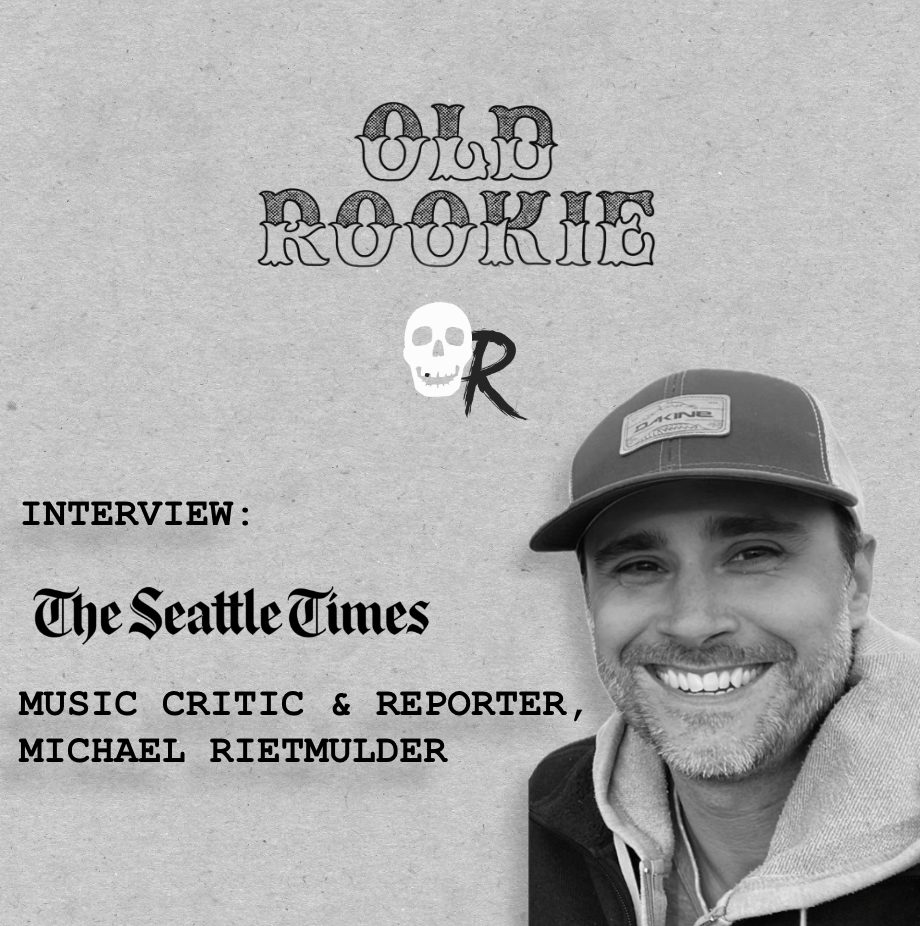
Michael Rietmulder is the music critic and arts reporter for the Seattle Times. He is a man required to keep up with the manic landscape of everything from exciting new artists, new venue operators, global tours coming through town and more. As the year winds down, it was a pleasure to connect with Michael to discuss his journey to Seattle and his thoughts on the state the local scene.
Ian Bremner: You’re originally from Minneapolis. What brought you to Seattle?
Michael Reitmulder: My wife got a job. She was poached by somebody she used to work with. It was 6 months after we had just bought our first house in the Twin Cities and then it was “welp, I guess we’re moving to Seattle.” It was a whirlwind. It’s been fantastic. I love it here. It’s been 7 years. We were on the road here in 2017 during a blizzard. Thought we were going to get stuck in Montana for the rest of our lives but we made it.
IB: How long have you been with the Seattle Times?
MR: 6 years.
IB: Has writing about music always been what you wanted to do?
MR: I was one of those kids who grew up stuck in my bedroom glued to music magazines and that spilled over from my teenage years into my twenties. I went to college and got on a journalism track. I thought I wanted to do more local and state government. That was a big interest. I got an internship through my college and I was the literally the last person to get accepted to this program. I think someone dropped out or got kicked out, but they couldn’t put me on the political team because it was filled, but they needed a music, arts and culture person. The program director knew I had played in bands and was interested in music so it was by default, but it was a little like “well, you’re in if you want it.” I was honestly a little disappointed at first, but then as I got into it, it revived that feeling of being the kid pouring through music magazines and I took off and ran with it.
IB: I don’t know if this is true or not, but I’ve always felt like Seattle and Minneapolis have an odd connection to each other. Perhaps because they’re the biggest markets between the west and midwest for tour stops, but do you find any similarities in the two music scenes?
MR: Big time! Your gut feeling there is right on. Culturally there are a lot of similarities between the two cities. There is a mix of valuing the outdoors, being two very literate cities that are appreciative and supportive of the arts. When I was growing up, Rhymesayers, the hip hop label in Minneapolis, was in their heyday and there were some Seattle artists doing a lot of stuff with them. Like Jake One. I honestly thought Jake One was a Minneapolis guy for a while. There were a few other Seattle artists involved there too. I think Vitamin D did some work with them. OddJob too. I notice a ton of people who have had a footing in both Seattle and Minneapolis music scenes.
IB: Being away for a few years has put a lot in perspective for me. Seattle is not a music “industry” town like LA or Nashville, but it is undoubtedly a MUSIC town. What sort of changes have you witnessed over the last few years in your post as Seattle Times music beat writer?
MR: Between the pandemic and the way music travels these days more digitally and how artists develop these days online. You could have a huge online following and struggle to sell 25 tickets to a club show, which is an interesting dynamic to see. There’s a bit more separation between the ground floor ground club scene, the artists working and growing there.
When you say Seattle is not an “industry” town, I’ve seen a lot of artists essentially echoing that sentiment, that there are not a lot of rungs for them to climb up, but on the other hand I look around and I see so many institutions and organizations that are there for that reason. Like MoPop Sound Off!, which for a lot of bands has been an important entry point to the local scene and helping them connect and getting on a few festival bills. Then there’s the local labels like Sub Pop and Den Tapes that are doing important work at all levels. Then the obvious, having an institution like KEXP here getting your music out on YouTube and way beyond the Northwest. That’s huge. So yeah, it’s not LA, Nashville, Atlanta, New York but at the same time there are a lot of organizations and support here than a lot of places.
IB: For the record, I don’t mean that in a negative sense. Having some visibility into “industry” type events, there’s really nothing better than the Tractor Tavern or the Sunset on a rainy Friday night.
MR: A place like Nashville and LA, people flock to it to be a part of the music business, and that’s exciting in a lot of ways. There’s a lot of people, still, that come to Seattle for the music scene and there’s a sense of pride in sense of place. This is “our community” and the venues we grew up in and that means a lot to the people here.
IB: This runs counter to what I was just saying, but it seems like there’s been a ton of big announcements recently in Seattle. KEXP purchasing a station in San Francisco to add broadcasting in the Bay Area, THING fest being moved out of Port Townsend, AEG opening the 6K venue in Carnation, how do you see these things affecting the overall music landscape in the region in the next few years?
MR: On the festival front, it seems to me there’s been a ton of growth. Upstream didn’t necessarily survive, but looking ahead to August we have Day In Day Out, THING Festival and now Bumbershoot is back. It’s going to be interesting, especially depending on where THING lands (new location). It would make the most sense it lands in Carnation, its the most obvious place. It will be interesting to see how those 3 all in a row, and all with somewhat similar audience demographics shape out. Each one is their own unique experience with different booking perspectives, but at the end of the day it’s mostly all of that indie-centric mindset where if you’re interested in attending one, you’re probably interested in attending the others as well.
IB: It seems like the popularity of music festivals has led to more, smaller and more curated festivals like Cave Creek Ramble, Timber, South Sound Block Party, South Lake Union Block Party, Chinook Fest, etc. How important are festivals like this for the local scene?
MR: They’re huge. You hit on one with Timber! You talk to anyone in the Seattle music scene and there’s a whole lot of love for Kevin Sur and the Artist Home folks for what they do, which is build that community feel, those type of events are huge. The idea of the Mega-Fests, love them or hate them, I get the pros and cons, but in terms of helping local artists grow and develop, it’s really important to get on some of those festival stages to get in front of people who may be coming for one of the other bands or are there just because it’s a fun thing to do. It’s important to get in front of those new audiences and you could argue more so than a Wednesday or Friday night club show.
IB: Going the completely opposite direction, large venues like Lumen Field and T-Mobile Park are doing lots of summer programming. Climate Pledge Arena hosts concerts year round, Seattle is booking some of the biggest names in music. What do you notice about Seattle crowds in general?
MR: Compared to other cities, I don’t know that I can make any sort of broad strokes statement, but you’re right. The last two years, 2023 especially huge with Taylor Swift and Beyonce coming and a few others like Drake and Ed Sheeran. A lot of that was the post-pandemic rush. Despite all the ridiculous resale fees and ticketing fees people are coming out to those show in droves. There’s a huge demand for those “event” level shows. People are making more of an event of them. You’re seeing people dressing up in sequins for Taylor Swift, Beyonce encouraged people to wear silver. It seems like everyone’s making more of an event out of them. Maybe it’s because everyone’s paying so much in ticket prices, it’s their big shot at it!
IB: I don’t want to get you in trouble here, but speaking of Taylor Swift and Beyonce some newspapers and big news outlets are dedicating entire positions to covering artists like Taylor Swift and Beyonce. As a journalist, what do you make of this type of single artist coverage?
MR: A lot of eyes certainly rolled at that. I get WHY somebody decided to create those dedicated positions. I personally would not want my job to be writing about the same artist. I don’t know what to think about it. It’s good that cultural journalists are getting employed anywhere in the year 2023, let’s put it that way.
IB: It’s the fabled list season.. Who are some of your favorite local artists these days?
MR: That’s always a tricky one. How about I reframe slightly and shout out a couple newer artists that I think are interesting. There’s a band called Sea Lemon. Kind of dream pop, faintly shoegaze-y band with some really strong melodies and just a killer live band. They’ve put out two EPs and I’ve been super impressed every time I’ve seen them. They’re signed to Luminelle Records, the Fat Possum imprint that Enumclaw is on.
Small Paul. A group of familiar players, guys who have been around the scene, but in a new band with a record I’ve taken a lot of comfort in this year. Those harmonies live are so rich, I love it.
On the hip hop side, fresh in my mind because I was listening in my car last night is Oranj Goodman. Super talented. Kind of blurs the wide striped line of hip hop and RnB. He can sing but is doing that hip hop informed cadences, but it’s not back and with one song being late night RNB and the next getting his bars off. It’s very fluid how he melds the two talents.
There’s all kinds of good stuff. It’s been harder for some people to find and uncover music going back to conversation about the disconnect of what’s happening online and in the clubs on any given night.
 Old Rookie