
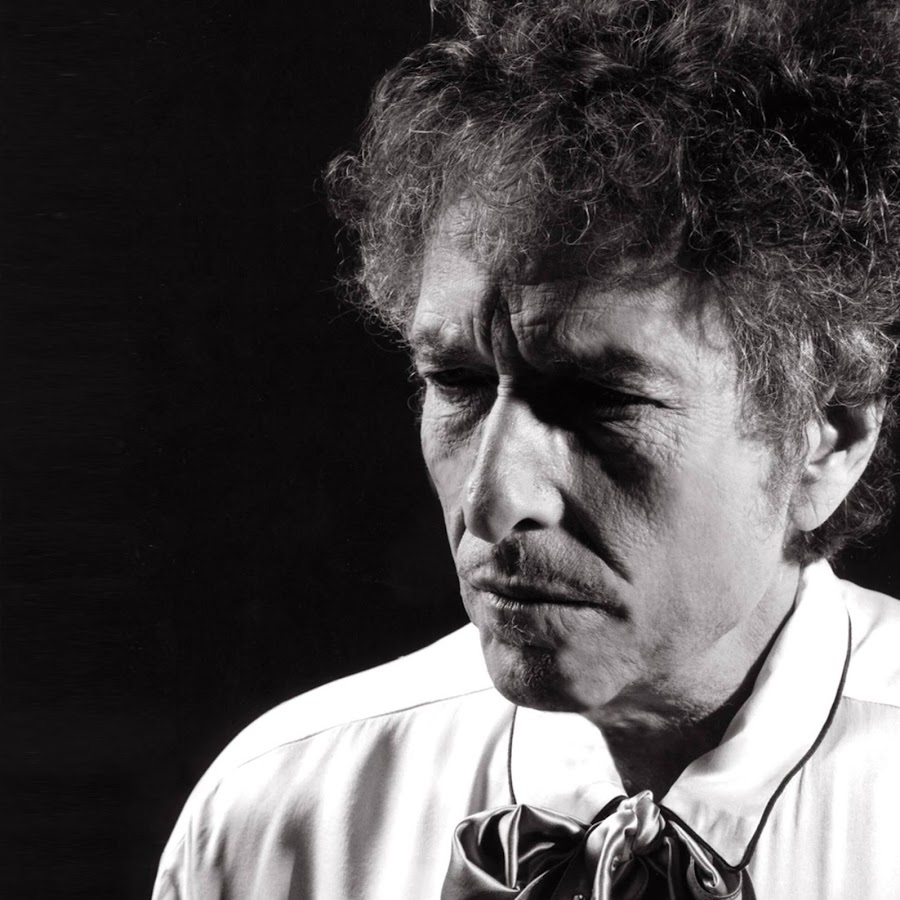
By Ben Fisher
Last summer, I visited the Scottish highlands, Key West, Florida, and attended four Bob Dylan concerts in Portugal and France. Though these destinations are thousands of miles from each other, the experiences weren’t independent, but comprised a pilgrimage of sorts as Dylan winds down a career of Odyssean proportions.
The Highlands and Key West must be impactful places for Dylan, who has titled two of his finest songs in the past quarter century about them: “Key West (Philosopher Pirate)” from 2020’s Rough and Rowdy Ways and “Highlands” off 1997’s Time Out of Mind.
Following in the footsteps of my idols is not a new thing for me. In middle school, I dragged my family through Soho to find Lee Hoo Fook, a Chinese restaurant mentioned in Werewolves of London because I had been listening to so much Warren Zevon. It was not the easiest task pre-Google Maps.
Another fan of this hobby appears to be Dylan himself, who was briefly detained by police in 2009 while walking the rainy, residential streets of Long Branch, New Jersey. A homeowner called 911 to report a suspicious, hooded, possibly homeless man wearing two rain jackets and sweatpants. Dylan, of course, never commented but the working assumption is that Dylan was looking for the house where Bruce Springsteen wrote Born to Run, because as Springsteen himself would tell you, there is not much else to do in Long Branch, New Jersey.
“Key West (Philosopher Pirate)” begins with the opening line of “White House Blues,” an old Charley Poole blues song, referencing the assassination of President William McKinley. “McKinley hollered, McKinley squalled…”McKinley was shot in 1901, 40 years before Dylan was born. 1901 is as close to 1941, the year Dylan was born, as we are today to 1984.
My grandmother liked to say that she had lived through a third of American history. Dylan has hit that mark now too. He was born the year that the Japanese bombed Pearl Harbor and has been alive for 15 American presidents. In 1962, when his self-titled debut was released, you could buy a copy of the New York Times for seven cents. When he was wrapping up high school, the flag still had 48 stars.
And to sum up just a small handful of his accomplishments, he introduced The Beatles to marijuana, sang at the March on Washington just before Martin Luther King Jr. delivered his “I Have a Dream” speech, invented a musical genre, and won the Nobel Prize for Literature. So, when he wanders Key West over the nine and a half minutes of the song, with the ghosts of Harry Truman and Ernest Hemingway and Tennessee Williams, he’s not an intruder or merely an observer. He belongs with them, there in the tropical American Pantheon.
Walking around Key West, you stumble across the landmarks mentioned in the song. But as ever with Dylan, there’s an impenetrable element. “Mystery Street off Mallory Square//Truman had his White House there,” Dylan sings. There are a half-dozen streets off of Mallory Square, none of which are called Mystery Street or anything close. Perhaps Dylan thought no one would poke around Key West to fact check him. But I’ve happily traveled the world for the man and will likely do so as long as I have the good fortune to.
The live version of “Key West (Philosopher Pirate)” has been revamped lately and is almost impossibly tender. Dylan’s piano playing these days can be hit or miss, but in Portugal he opened the tune with theatrically beautiful arpeggios. He summons the ghosts of his colleagues and those who went before. The ones who only need one name to be identified: Corso, Kerouac, Louie, Jimi, Buddy…
Later in the set, he brings the harmonica to his lips and in the yellow stage lighting, he is transformed. He is a lonely Civil War soldier playing a jaw harp around the campfire. He is my great-grandmother covering her face, lighting Shabbat candles. He is young again, baby fat recently burned off, blowing big mushrooming breaths into the Hohner in the middle of a wandering harmonica solo during “Mr. Tambourine Man.”
Three weeks after I see three shows in June, I join 5,000 other pilgrims walking through the ancient streets of the medieval walled city of Carcassonne, France, to pay tribute. Recent shows have started right on the dot at the time listed on the ticket. Lisbon started three minutes early. In Carcassonne, he’s nearly twenty minutes late. He looks frailer, he sports a large white bandage on his index finger and when he stands, he splits his legs and puts one hand on the top of the piano at times, steadying himself.
Bob Dylan is 83 and it’s conceivable that Rough and Rowdy Ways will be his final studio release, though that idea has certainly been floated before about previous records. “Key West,” the last of the Florida Keys before land gives way to the endless ocean may well be his acknowledgement that things are coming to an end.
“Highlands” was, until 2020, the longest song that Dylan had ever released, a winding 16-minute stream of consciousness narrative that also featuring a borrowed first line, this time from Scottish poet Robert Burns: “My heart’s in the highlands.” It features fewer location-specific references than “Key West (Philosopher Pirate)” but still enough for me to startle my wife on the road in Scotland, just north of Inverness. I catch sight of a gorgeous cluster of flowers on the side of the road. “Bluebells!” I yell at my wife, making her jump in the passenger seat. “Just like in the song!”
In 2006, Dylan bought a massive house in the Scotland’s Cairngorms National Park for 2 million pounds. It’s not hard to picture the afterlife for Dylan as a never-ending series of walks in the foggy highlands amid the mirror still lochs to the soundtrack of an endless blues riff. Coming home to an ancient manor house with a fire in the hearth and a never ending supply of cigarettes, ballpoint pens, and paper, a kitchen full of cider, aged cheddar and venison sausages, and the ones he loves. Thank you, Bob, we all owe you so much.
Ben Fisher is a writer, traveler, songwriter and Bob Dylan fan living in Brussels
 Old Rookie